
I’ve been watching something interesting happen over the past couple of years. The way people search for information has changed and most businesses don’t seem to have noticed yet.
People don’t click through to page two of Google anymore. They’re not comparing five different websites or scrolling through blog posts. Instead, they’re just asking questions…
“What’s the best CRM for a startup?”
“Which courses are good for upskilling marketing teams?”
“What’s the most effective way to reduce staff turnover?”
And AI tools like ChatGPT, Gemini, Perplexity and CoPilot are answering them directly, often without sending anyone to an actual website.
If you’re in marketing or rely on people discovering your business online, this is probably the biggest shift we’ve seen since SEO, and it changes everything about how your funnel works.
So what is AEO anyway?
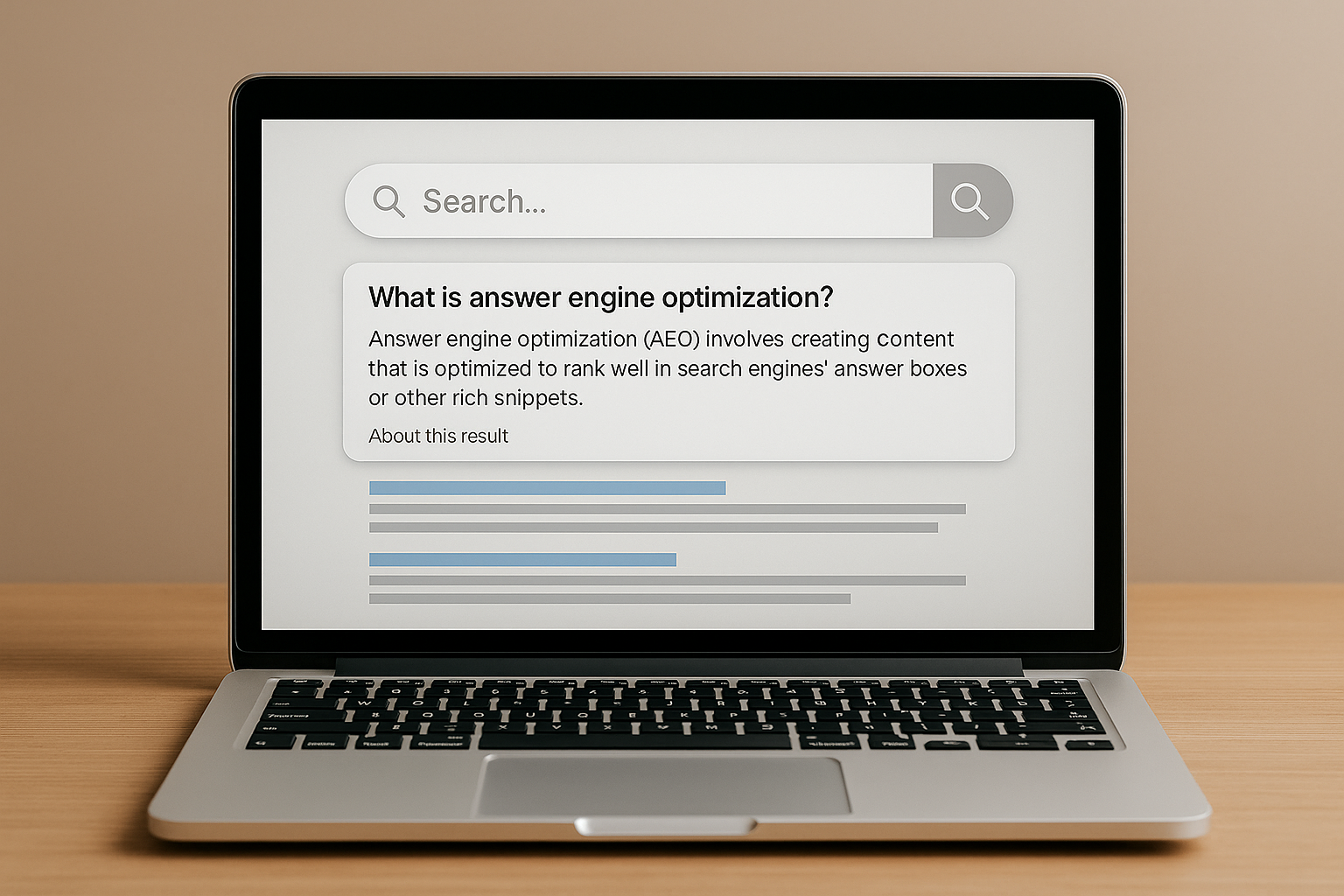
AEO stands for Answer Engine Optimisation. Some people are referring to this as GEO (Generative Engine Optimisation) but basically it’s about making sure your business shows up inside AI powered answer engines, not just traditional search engines.
I suppose the difference is with SEO, you’re trying to rank for keywords and with AEO, you’re trying to be the answer when someone asks a question in natural language.
How AI actually finds your business
AI tools work through what’s essentially a three-layer system:
First, there’s the foundation model knowledge. The core information baked into the AI during its training. This gets updated infrequently, maybe once every year or two when major new versions are released.
Second, there’s real-time web search. When someone asks ChatGPT or Perplexity about solutions in your space, the AI often performs a live search and pulls in current results. This is actually the fastest way to appear in AI responses. If you’re ranking well on Google or Bing, you can show up in AI answers almost immediately.
Third, there’s how it all gets synthesised. The AI combines what it “knows” from training with what it finds through search to create a coherent answer.
AI tools pull their answers from a few key places: clear on-site content, FAQs, structured data (the technical stuff in your website’s code), third-party citations, authoritative sources, and consistent business information across directories.
If your business isn’t represented in the sources AI trusts, you just won’t appear.
How this is changing buyer behaviour
What I’m seeing from a lot of clients is a new “invisible funnel” where most of the decision making is happening off your website, inside AI tools.
Research suggests about 70% of buying decisions are made before someone even visits your site. AI summaries, reviews and comparisons are shaping the shortlist before you ever enter the customers thoughts.
ChatGPT and other AI are becoming gatekeepers deciding which brands appear first when someone asks a question.
We’ve shifted from link-hunting to answer-seeking. People want clarity immediately, not a list of ten blue links to sort through.
And here’s the thing that’s a bit worrying, your content is being remixed everywhere. AI repurposes what you’ve written across forums, reviews and other platforms, often with no click back to you.
So for marketers we’re moving from click-based metrics to influence metrics. The question becomes: “How often does AI mention or recommend us?”
Zero-click search is already here
Nearly 60% of Google searches in the US and EU now end with zero clicks. People get their answer immediately through AI Overviews, featured snippets, or auto-generated summaries.
Traditional organic visibility is shrinking. Where you “rank” matters less than whether you’re included in the answer at all.
Lower in the funnel
The visitors who do reach your site are already about 70% through their decision process. AI tools have done the comparison, the summarising, the positioning. Your site becomes the final confirmation, not the starting point.
But here’s the problem: you lose visibility on the early journey. Most discovery is happening off-site and completely away from your analytics.
And if AI can’t summarise your content in a meaningful way, it won’t recommend you. No summary means no presence, which means no pipeline.
What you can actually do about it
There are some practical things I’d recommend:
Build proper FAQs
For me this is the first thing you should do. Good FAQs resolve actual user concerns, gives AI clear answers to pull out and significantly increase your chances of being included in AI responses. They also work brilliantly with structured data if you go that route.
Write question based content
Instead of titling something “Our Platform Features”, think more along the lines of:
- “How do you evaluate engineering bootcamps?”
- “What does a good developer onboarding programme look like?”
- “How do you reduce customer churn in year one?”
AI tools prioritise content that’s written as direct answers to questions.
Consider structured data
I know this sounds technical, but structured data (schema markup) is basically the label that AI engines read first. FAQ schema, product schema, local business schema, review schema. These help AI understand what your content is about. If you’ve got a developer or agency, it’s worth asking about. You can also check your website here: validator.schema.org
Get your directory presence sorted
This is the boring admin work that actually matters. Make sure your Name, Address, and Phone Number are consistent across Google Business, LinkedIn, industry directories, review platforms, and local business databases.
Inconsistent details reduce trust, which reduces your chances of being included in AI answers.
Check what AI already says about you
Here’s something most brands aren’t doing: open ChatGPT and ask it something like:
“What are the best companies for ________ in the UK?”
You’ll immediately see who AI recommends, who appears consistently, how you’re described, or whether you’re missing entirely.
It’s genuinely the fastest competitive intelligence tool we’ve ever had.
Make your content AI-readable
AI seems to prefer short sentences, fact-first writing, clear headers, and avoiding overly salesy language. Specific data and examples help too.
Write for humans, obviously. But structure it in a way that makes it easy for machines to extract the key points.
Think about semantic understanding over just keywords. Instead of stuffing “best CRM software” into your content ten times, focus on comprehensively answering the questions people actually ask: What makes a CRM effective? What features matter? How do you implement it?
AI tools are smart enough to understand intent. They’ll recognise your content as relevant even if you don’t use the exact phrases people search for.
Encourage and respond to reviews
Reviews are one of the main signals AI uses to determine credibility and quality. Businesses with consistent, recent, positive reviews across multiple platforms are the ones AI recommends.
Make it easy for happy customers to leave reviews. Respond to them (even the good ones). And absolutely respond professionally to any negative feedback.
Reviews matter because AI systems are increasingly pulling from authentic user discussions and experiences. Platforms like G2, TripAdvisor, Google Reviews, and even relevant Reddit threads can all feed into what AI “knows” about you.
Get mentioned beyond your own channels
Don’t just focus on your own website and social media. The more places your business is mentioned positively, the stronger the signal to AI that you’re worth recommending.
This could mean:
- Getting featured in industry publications or trade media
- Being included in “best of” lists on reputable sites
- Appearing in relevant news coverage
- Getting mentioned by industry influencers or thought leaders
- Being discussed in relevant online communities (Reddit, industry forums)
- Contributing guest posts to authoritative sites in your sector
Each mention from a trusted source strengthens your authority and increases the likelihood AI will reference you.
A word about using AI to create your content
Here’s something worth mentioning: you can absolutely use AI tools to help create your content. I’ve seen content created with AI assistance rank well both in Google and in AI responses.
The key is quality. AI-generated content can perform just as well as human-written content, as long as it’s genuinely useful. Google has explicitly said it rewards quality regardless of how content is produced.
So if you’re using AI to help write your website copy, blog posts, or social content, focus on:
- Starting with thorough research about your business and what makes it special
- Adding your unique insights and specific examples
- Having someone with real expertise review and personalise the output
- Making sure it solves real problems or answers real questions your audience has
Think of AI as a first draft tool that you then refine with your expertise and industry knowledge. That combination tends to work really well.
Where this leaves us
Don’t believe those blogs that say “AI KILLED THE SEO STAR”, AI isn’t replacing search, it’s reordering it.
The businesses who adapt to this early are going to dominate discovery over the next few years. The ones who don’t will probably wonder why their traffic dropped, their leads dried up, and their brand stopped being mentioned in the places that matter.
I think this is actually a significant opportunity for businesses willing to take a more strategic view of SEO, content and brand authority.
If you want to chat about making your content more AI visible, auditing how AI currently describes (or doesn’t mention) your brand, or building a content plan with AEO in mind, I’m happy to help.